Juan Alas
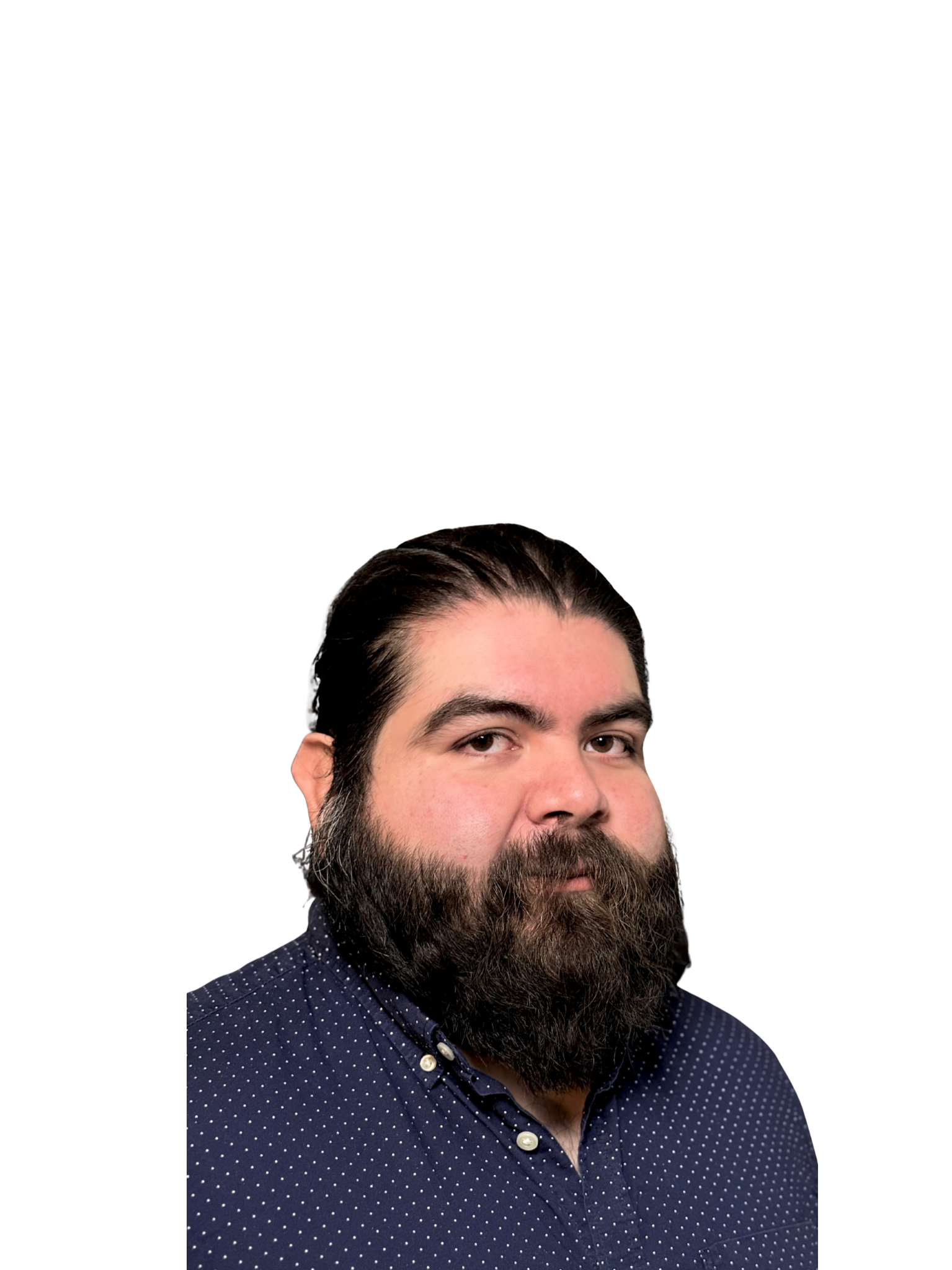
We are delighted to introduce our Alumni & Friends community to alumnus Juan Alas. Juan earned Highest Honors when he graduated with his A.S. degree in 2020 and continued to the University of Florida where he achieved a Bachelor of Science in Psychology. Juan is preparing for his next academic milestone as a PhD student in Neuroscience at Florida Atlantic University. Juan shared with us his personal path and reflections about the impact of Broward College on his past and the research passions of his future.
Juan, where did you grow up and what led you to study at Broward College?
I was born in Miami, to a single mother who came to this country in search of opportunity, not knowing a single word of the language, and struggling to keep a roof over our heads and food on the table through her hard work and tenacity. I was raised in Miami Gardens, during a time where it was a dangerous and unincorporated area of Miami-Dade County, and a predominantly black and Hispanic neighborhood—as a result, the schools were severely underfunded and lacked many resources to adequately help their students excel academically. What further complicated these circumstances, for me, at least, was that because my mom did not know how to read or understand English, she could not help me with homework, and so my first few years in school were marked by struggle and helplessness. Though I eventually began to “thrive”, I found myself feeling like I was never adequately challenged—that is, I found that many of the teachers I encountered along my academic journey were either hindered by the school system or simply didn’t care to bring out the best in their students. I adopted the same carelessness during my time in high school and barely graduated—not because I didn’t understand the material, but because I wasn’t motivated enough to care to engage with it. Looking back, I see this as a failure on my own part, and take ownership of educational apathy, although I also recognize the role that environment plays in how we develop perceptions. Out of high school, circumstances forced me to start working right away, and I was lost for some time, thinking I would climb retail and corporate ladders and work in those spaces for the rest of my life, however, something was missing. I was unhappy, and didn’t necessarily know why, but my natural curiosity was causing me to question everything, and through conversations with friends and coworkers, I found that I was always asking the same questions about reality, physics, philosophy, and about our place within all of it. I started reading and challenging my own viewpoints, realizing that many of my beliefs and biases were conditioned by my environment, and that they were inadequate representations of reality; I felt that through the pursuit of these questions, I was slowly liberating myself from pervasive paradigms that severely limited my awareness, of both myself, in the form of my thoughts and behavior, but of how systemic these conditions are. I was motivated to go to college because I knew that I did not have the adequate tools to expand on these questions, or even what questions to ask in order to quell my own curiosities, and because I wanted to “stand on the shoulders of giants”, and contribute even the smallest insight to our collective species’ insights into our place in this vast cosmos.
Can you tell us about one or two moments that stand out about your time at the College?
Almost every time I stepped on campus it stood out to me for one reason or another, but one of the moments that stood out to me the most is the experience I had during a Club Rush on South Campus where I set up a small experiment as a demonstration to get students interested in our club. During my last year at BC, I had the honor to be appointed club president of Food for Thought, a club organized and started by Professor Rudy Jean-Bart, aimed at stimulating curiosity, intellectual discussions of complex issues, and scientific thinking and literacy. The experiment was a demonstration of the “body transfer illusion”, where the mind is “manipulated” into correlating a rubber hand with their own appendage, and then striking the rubber hand with a hammer, typically inducing a frightful reaction from the subject. We drew a large number of students interested in trying it for themselves, and sparking a lively conversation. It stood out to me because it demonstrated that people are actually interested and curious about science, and even the deeper philosophy and implications of how easily we can be manipulated, but may not have been engaged meaningfully throughout their own educational journeys. Seeing the awe and confusion in so many faces was rewarding, because it reminded me of how I felt when I first started to really question my own understanding.
Another moment that stood out to me was during an inquiry session with Professor Joshua Kimber; Professor Kimber facilitates these inquiry sessions in his office after class, where one is welcome to come and have conversations and ask questions about any topic that may come up. During one of these sessions, we went on a nature walk around campus, where Professor Kimber pointed out to us the different varieties of plants and trees that the college has curated on Central Campus, and the different kinds of wildlife that benefit from these host plants being there. Particularly, in front of Building 1, there was a small garden next to the entrance, where he pointed out that there was a specific host plant that provided a home for a caterpillar that would one day become a butterfly—an entire world and ecosystem living and thriving on a path I had walked a thousand times, without ever once stopping to appreciate it—until he pointed it out. That experience has made me more appreciative of the subtleties that may be right outside our field of awareness, but are just as vivid and full of life as our own experiences. In other words, it taught me the importance of the little things, and not to take anything for granted.
Did you have any favorite professors or people at the College who were important to you as a student?
Almost every professor I encountered at BC provided valuable insight, good or bad, but I would not have made it to where I am in my journey without Professor Kimber and Professor Jean-Bart. The way they value education and provide the tools for students to think critically about themselves and our collective history, and what it means to be human are transformative experiences that is at the root of what education should be about. Yes, it serves as a foundation for our careers, but perhaps most importantly, it should be a way to critically engage with our surroundings, challenging ourselves and the status quo, and teaching us to be unafraid of the unknown. We must continue to push for truth, justice, and have a complete picture of our past in order to avoid the same pitfalls in the future. Professors like them give us the insight and the tools to think for ourselves, and not simply regurgitate information, but to actively transform it in new and novel ways that benefit us as individuals, and hopefully, as a species.
Were there any particular resources at the college that were important to you when you were a student?
Without a doubt, the people. Every professor, the faculty, everyone you meet has one goal in mind, and that is to benefit and facilitate your education. The student body is also very active, and was another amazing resource, particularly in seeing the vast amount of perspectives and individual journeys.
In addition to the people, having the online library resources for journals and articles was fantastic for finding sources when writing papers, but also simply as another tool to further expand on questions and gain insight into how scientists and thinkers go about tackling a problem or a question.
Where did you go after Broward College? What was your path? How did what you learn at the College prepare you for your path?
After Broward College I had the privilege of attending the University of Florida. There, I earned my Bachelor of Science in Psychology, specializing in Behavior Analysis. I carried every lesson and experience I had at BC, and used it as a way to actively engage with the resources at UF, and to continue to challenge myself by constantly re-evaluating my convictions and looking for opportunities to grow and stimulate my curiosities. I knew what kinds of questions to ask, how to ask them, where to go to get my answers, and how to evaluate those answers to better understand how they fit within different contexts, or if they fit at all. Most of all, I saw the people I engaged with as an end in and of themselves, not as means to an end—in other words, I saw them as who they are: people on their own journeys, and not as just another person that could get me to where I wanted to be.
This Fall, I’ll be starting the next chapter of my journey as a PhD student in Neuroscience at Florida Atlantic University. My research will focus on understanding how our environment shapes perception and decision-making, and how overcoming adversity can lead to structural changes in the brain that foster resilience. I’m also interested in exploring how individual behaviors not only emerge within, but are reinforced by, the larger systems and cultural conditions that surround us.
What do you wish other people knew about Broward College, something you think is a best kept secret or a something that makes our college standout among other institutions?
I wish they knew how important it is to challenge yourself, and to challenge the history of contingencies that form our behavioral repertoires; that is, I wish people didn’t just see BC as a stepping stone to get them into another institution or a degree, but as a transformative experience that allows you to critically examine yourself, your beliefs, and your behaviors, such that you come away as a more aware version of yourself that isn’t limited by your environment and circumstances, but instead provides them the tools, tenacity, and curiosity to pave the way for a better future, one that isn’t obstructed by cookie cutter molds and limitations, but that actively ventures unafraid into the unknown. All this to say, the best kept secret is its people and the passion they carry with them for their respective subjects, but also for the purpose of education in general. The knowledge that we are all building toward a better future together, for ourselves and each other, where every piece plays its part.